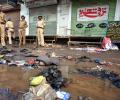
The Bombay High Court has discharged four accused in the 2006 Malegaon blasts case, criticising the NIA for ignoring crucial evidence. The court highlighted contradictions in the NIA's investigation compared to the initial probe by the ATS, leaving the question of responsibility for the blasts unanswered.
The Bombay High Court has discharged four accused in the 2006 Malegaon blasts case, criticising the NIA for ignoring evidence collected by the previous investigating agency. The court's decision leaves the question of responsibility for the blasts, which killed 31 people, unanswered.

The Bombay High Court has upheld a lower court's decision to frame murder charges against eight police officers in connection with the 2014 custodial death of Agnello Valdaris, citing inconsistencies in police records and evidence of custodial torture.
The Bombay High Court has upheld a trial court's decision to frame murder charges against eight police personnel in connection with the alleged custodial death of Agnello Valdaris in 2014, citing inconsistencies in police records and evidence of custodial torture.
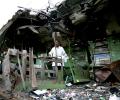
The investigation for 7/11 blast in which 189 people died was under question mark from the very first month after the Mumbai Anti-Terrorism Squad started arresting the accused from different parts of city. Within 10 days of blast by July 22, 2006, ATS arrested all the 13 terror accused in the case under the leadership of ATS chief, K P Raghuvanshi.
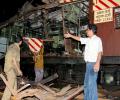
The Bombay High Court has repeatedly flagged the 'copy-paste' culture in confessional and witness statements in chargesheets, calling it a 'dangerous' trend. This issue was highlighted again after the acquittal of the 2006 Mumbai train blasts accused, with the court noting similarities in their confessional statements.

The collegium said the Chief Justice of the Delhi high court, in consultation with his two senior-most colleagues, had on May 30 recommended the elevation of the judicial officers as judges of that high court.

The Central Bureau of Investigation was on Wednesday allowed two days transit remand of Swan Telecom promoter Shahid Usman Balwa by a Mumbai court to take him to Delhi and confront him with former Telecom Minister A Raja, who is also in the agency's custody in connection with the 2G spectrum case.

Unless the judges factor in the ungovernability of technologies and their beneficial owners, present and future Presidents, prime ministers, judges, legislators and officials handling sensitive assignments may become redundant with reference to their age-old roles for securing 'national resources and assets', warns Dr Gopal Krishna.
The plan of UID/Aadhaar-based surveillance does not end with the collection of fingerprints and iris scan, it goes quite beyond it and poses a lethal threat to the idea of India, says Gopal Krishna.
 © 2026 Rediff.com - Advertise with us - Disclaimer - Privacy Policy - Sitemap - Feedback - About us - Terms of use - Grievances